
Glycosyl compounds

![Alkali Scientific X Glucoside [5 Bromo 4 Chloro 3 indolyl β D glucopyranoside], 1 G](https://assets.fishersci.com/TFS-Assets/CCG/product-images/5000661860.jpg-250.jpg)
Alkali Scientific X Glucoside [5 Bromo 4 Chloro 3 indolyl β D glucopyranoside], 1 G
X Glucoside [5 Bromo 4 Chloro 3 indolyl β-D-glucopyranoside], 1 g is a chromogenic substrate used in biochemical assays for the detection of β-D-glucosidase activity. Upon hydrolysis by the enzyme, it produces a colored compound that can be quantified spectrophotometrically. This substrate is commonly employed in microbiological studies, particularly for identifying bacteria or yeasts that express β-D-glucosidase. It serves as a valuable tool in enzyme assays and screening processes for the presence of specific metabolic enzymes. X Glucoside is frequently used in research, including genetic studies, enzyme characterization, and microbiological diagnostics.

![Alkali Scientific 4 Methylumbelliferyl α D Galactopyranoside Monohydrate [4 Methylumbelliferyl α D Galactoside], 1 G](https://assets.fishersci.com/TFS-Assets/CCG/product-images/5000660213.jpg-250.jpg)
Alkali Scientific 4 Methylumbelliferyl α D Galactopyranoside Monohydrate [4 Methylumbelliferyl α D Galactoside], 1 G
Methylumbelliferyl α-D-Galactopyranoside Monohydrate (1 g) is a fluorogenic substrate that is widely used in assays to detect and quantify galactosidase activity. This reagent is critical in studying the breakdown of galactose-containing polysaccharides and glycoproteins in microbial, plant, and animal systems. Upon enzyme cleavage, it produces a fluorescent product that can be easily detected using a fluorometer, providing a sensitive method for enzyme activity measurement. The 1 g quantity is ideal for high-throughput laboratory experiments, allowing for large-scale screening and research of galactosidase enzyme activity in various biological contexts.

Medchemexpress LLC Transforming growth factor beta 1 (recombinant pig, His-tagged) | 2UG

Recombinant animal-free transforming growth factor beta 1 (TGF-β1) derived from pig, supplied as a His-tagged, lyophilized protein produced in Escherichia coli. The preparation corresponds to the mature chain (A279-S390), demonstrates biological activity (ED50 <0.1 ng/mL in HT-2 assay), and is formulated for stability and long-term storage.
![Alkali Scientific P Gal [Phenyl β D Galactopyranoside], 1 G](https://assets.fishersci.com/TFS-Assets/CCG/product-images/5000661406.jpg-250.jpg)
Alkali Scientific P Gal [Phenyl β D Galactopyranoside], 1 G
Phenyl β-D Galactopyranoside (P Gal) is a biochemical reagent used primarily for enzyme assays in laboratory settings. This reagent is often utilized to study the activity of β-galactosidase, an enzyme involved in lactose metabolism. When β-galactosidase is present, it hydrolyzes the bond in phenyl β-D galactopyranoside, releasing phenol, which can be detected by colorimetric methods. This 1g sample is ideal for small-scale research and is particularly useful in molecular biology, microbiology, and genetic studies, where it helps to monitor gene expression and enzyme activity in various model organisms.

Medchemexpress LLC Interferon beta Antibody (YA1560) | 100 UL
Interferon beta Antibody (YA1560) is a liquid laboratory chemical supplied by MedChemExpress for research use. It has a predicted and observed molecular weight of 22 kDa and is provided at a concentration of 1 mg/mL.
- Host: Rabbit
- Reactivity: Human
- Clonality No.: YA1560
- SwissProt ID: P01574
- Gene ID: 3456
- Concentration: 1 mg/mL
- Conjugation: Non-conjugated
- Application: WB, IP
- Dilution Ratio: WB: 1:500-1:1000; IP: 1:50
- Formulation: Supplied in Rabbit IgG in 10mM phosphate buffered saline, pH 7.4, 150mM sodium chloride, 0.05% BSA, 0.02% sodium azide and 50% glycerol.
- Storage and stability: Stored at -20°C for 1 year. Avoid repeated freeze/thaw cycles.
- Shipping: Shipping with blue ice.
- Identified uses: Laboratory chemicals, manufacture of substances.
- Appearance: Liquid
Medchemexpress LLC Beta IV Tubulin Antibody (YA2267) | 50 UL
Beta IV Tubulin Antibody (YA2267) is a rabbit-derived, non-conjugated IgG monoclonal antibody that targets beta IV Tubulin. This antibody can be used as a loading control. Beta IV Tubulin is a primary component of microtubules, which are cylindrical structures formed by alpha- and beta-tubulin heterodimers. Microtubules elongate by adding GTP-tubulin dimers to their ends, creating a stabilizing cap.
- Host: Rabbit
- Isotype: IgG monoclonal antibody
- Reactivity with human, mouse, and rat samples
- Suitable for Western Blot (WB), Immunohistochemistry-Paraffin (IHC-P), Immunohistochemistry-Frozen (IHC-F), and Immunocytochemistry/Immunofluorescence (ICC/IF) applications
- Molecular weight: 50 kDa (predicted and observed)
- Storage conditions: -20°C for 1 year, avoid repeated freeze/thaw cycles
Medchemexpress LLC Acetobromo-α-D-glucuronic acid methyl ester | 25 G
Acetobromo-α-D-glucuronic acid methyl ester is a glucuronosyl donor that is applicable to the synthesis of other compounds.
- Is a glucuronosyl donor
- Applicable to the synthesis of other compounds
![Alkali Scientific NPG [p Nitrophenyl β D glucuronide], 1 G](https://assets.fishersci.com/TFS-Assets/CCG/product-images/5000661479.jpg-250.jpg)
Alkali Scientific NPG [p Nitrophenyl β D glucuronide], 1 G
NPG (p Nitrophenyl β D Glucuronide), available in a 1g pack, is an essential reagent used for detecting glucuronidase activity in biochemical and microbiological research. The substrate, upon hydrolysis by glucuronidase enzymes, produces a yellow-colored compound that can be easily quantified, making it a critical tool for enzyme assays. NPG is commonly employed in research related to drug metabolism, liver function, and glucuronide conjugation. The 1g pack provides a larger supply for extended assays, making it ideal for high-throughput testing. This reagent is widely used in pharmaceutical and clinical laboratories for glucuronidase assays and enzyme activity studies.

Medchemexpress LLC GARPLatent TGF beta 50ug | 50ug
GARP/latent TGF-b1 complexes are potent inducers of Th17 differentiation in the presence of exogenous IL-6 and inducers of Treg in the presence of IL-2 GARP Latent TGF beta Complex Protein Mouse (HEK293 His) is a biotinylated recombinant protein (GARP (I18-N628) TGF-b1 (L30-S390)) produced by HEK293 cells with His tag[1][2]

Medchemexpress LLC NRG1-beta 1 Human 100ug
Recombinant human NRG1-beta 1 (residues S177-E241) is a 65-amino-acid, His-tagged polypeptide produced in E. coli and supplied lyophilized. It is >95% pure and provided with formulation and storage conditions suitable for biochemical and cell-based assays, and is used to study HER2/HER3 signaling and Fn14 regulation in cancer and neurological research.
- Contains 65 amino acids (S177-E241) representing the beta-1 isoform.
- Expressed in E. coli with an N-terminal 6xHis tag for easy purification.
- Purity greater than 95% as determined by reducing SDS-PAGE.
- Lyophilized formulation from Tris-NaCl buffer for stability and long-term storage.
- Validated activity in MCF-7 cell proliferation assays (ED50 ~5.7 ng/mL), suitable for signaling studies.

Medchemexpress LLC SIRP beta Mouse HE 10ug | 10ug
SIRP-beta (Sirpb CD172b) is a member of the signal-regulatory-protein (SIRP) family and also belongs to the immunoglobulin superfamily SIRP family members are receptor-type transmembrane glycoproteins Sirpb was found to interact with TYROBP/DAP12 a transmembrane adaptor protein bearing immunoreceptor tyrosine-based activation motifs resulting in the tyrosine phosphorylation of DAP12 and the subsequent recruitment of Syk to the Sirpb-DAP12 complex Sirpb is also implicated as a positive regulator of hematopoietic cells SIRP beta Protein Mouse (HEK293 His) is the recombinant mouse-derived SIRP beta protein expressed by HEK293 with C-His labeled tag

Medchemexpress LLC Beta-glucuronidase (Escherichia coli) | 9001-45-0 | ~290 kDa (tetramer), 68 kDa (monomer) | 50 KU
Beta-glucuronidase is a glycosyl hydrolase that hydrolyzes β-glucuronic acid and sulfate esters found in urine and other biological fluids, releasing β-glucuronate. This enzyme's deficiency is linked to mucopolysaccharidosis type VII (MPSVII), which leads to lysosomal storage in the brain.
- Molecular weight: ~290 kDa (tetramer), 68 kDa (monomer)
- Optimum pH: 6.0-7.0
- Soluble in water at 10 mg/mL (requires ultrasonic and warming)
- Store at -20°C for 2 years
- For research use only
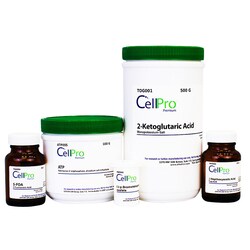
Alkali Scientific 2 Nitrophenyl β D Glucopyranoside, 100 Mg
2-Nitrophenyl β-D Glucopyranoside is a chemical reagent widely used in enzymatic assays to detect and measure β-glucosidase activity. This compound serves as a substrate for β-glucosidase, which cleaves the β-glucopyranoside bond, releasing a yellow color in the process. This colorimetric reaction is often used in laboratory tests for enzyme kinetics and in the study of carbohydrate metabolism. The 100mg quantity provides sufficient material for multiple small-scale experiments and assays. It is commonly used in genetic research, microbiology, and diagnostic labs to study enzyme behavior, with a wide range of applications in both basic and applied research.
Medchemexpress LLC β-Eudesmol | 473-15-4 | 1 MG
β-Eudesmol is a sesquiterpene-like compound extracted from the rhizome of Atractylodes lancea. It exhibits anticancer and anti-inflammatory activities, induces apoptosis, and acts as a neostigmine antagonist, making it suitable for various biological studies.
- Inhibits cell proliferation in various tumor cells
- Reduces angiogenesis by inhibiting VEGF and bFGF induced proliferation in HUVEC cells
- Induces apoptosis through caspase-3 activation
- Acts as a neostigmine antagonist, preventing neuromuscular failure
- Inhibits NF-κB signaling pathway, providing anti-inflammatory and antioxidant effects
- Useful for sepsis disease research
Medchemexpress LLC Phospho-beta Catenin(Ser675) Antibody (YA5779) | Predicted band size: 85 kDa; Observed band size: 85 kDa | 10 UL
Phospho-beta Catenin(Ser675) Antibody (YA5779) is a rabbit-derived monoclonal antibody targeting Phospho-beta Catenin(Ser675), a pivotal player in the canonical Wnt signaling pathway involved in cellular processes like gene activation, cell adhesion, and neurogenesis. This antibody is suitable for applications such as Western Blotting, Immunocytochemistry/Immunofluorescence, ELISA, and Immunoprecipitation.
- Targets phospho-beta catenin(Ser675)
- Rabbit-derived IgG monoclonal antibody
- Reactivity: Human, mouse, rat
- Applications: WB, ICC/IF, ELISA, and IP
- Formulation: PBS, 50% glycerol, 0.05% Proclin 300, 0.05%BSA
- Storage: 1 year at -20°C (avoid repeated freeze/thaw cycles)
- Appearance: Liquid